
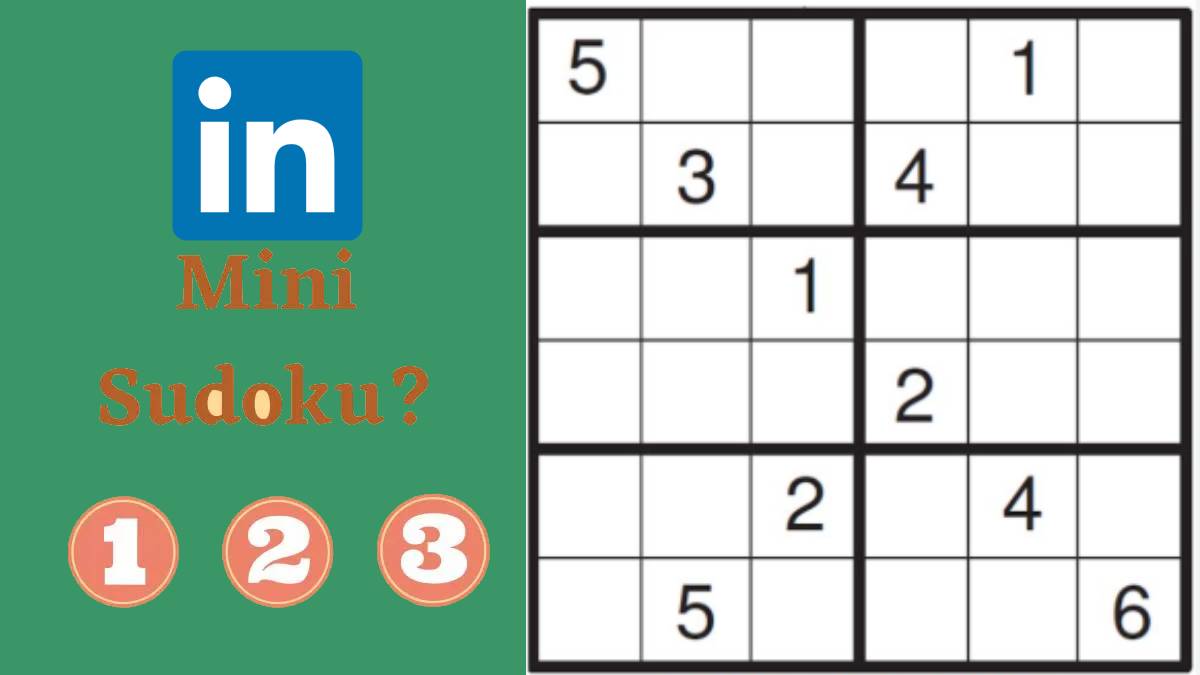
Remind readers that LinkedIn’s daily Mini Sudoku puzzle adds a splash of brainy fun to a busy workday.
Emphasize how solving one puzzle each morning can sharpen the mind, offer a quick confidence boost, and even provide a micro-break between meetings.
Cue up that today’s hint and solution are coming right up — no spoilers yet!
What Is LinkedIn Mini Sudoku?
Explain the game in simple terms:
- Mini Sudoku is a compact 4×4 or 6×6 version of the classic 9×9 Sudoku, embedded within LinkedIn’s suite of daily games.
- Players fill the grid so that each row, each column, and each mini-region contains all numbers (or letters, depending on game style).
- It’s designed to be fast — solvable in just a few minutes — making it ideal for mental exercise during a coffee break or between tasks.
- Mention that the platform occasionally offers hints to guide when you’re close but stuck.
Today’s Hint
While waiting for the real clue, you can write:
“Today’s hint points to 6, 5, 7,9 2, nudging you toward a potential strategy. Think about how that clue refines your options for the remaining cells.”
Describe how one might interpret the hint:
If it suggests a particular number or region, readers can narrow down possibilities.
Encourage them to trust instincts but also double-check placement against Sudoku rules.
Today’s LinkedIn Mini Sudoku #5 Answer
5 1 3 | 2 6 4
2 4 6 | 5 1 3
1 5 4 | 6 3 2
——+——
3 6 2 | 1 4 5
4 2 1 | 3 5 6
6 3 5 | 4 2 1
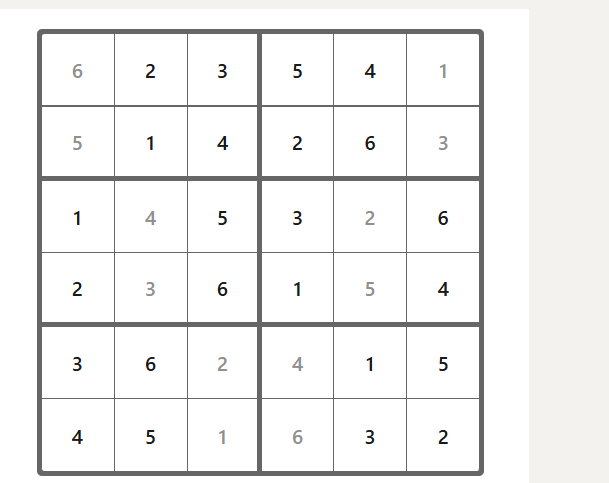
Sulotion #4
6 2 3 5 4 1
5 1 4 2 6 3
1 4 5 3 2 6
2 3 6 1 5 4
3 6 2 4 1 5
4 5 1 6 3 2
Once you obtain the full solution:
1 2 3 | 4 5 6
5 4 6 | 3 1 2
6 3 1 | 5 2 4
——+——
4 5 2 | 6 3 1
2 6 5 | 1 4 3
3 1 4 | 2 6 5
- yesterday answer #2
1 2 3 | 4 5 6
4 5 6 | 2 3 1
3 1 4 | 5 6 2
——+——
2 6 5 | 3 1 4
5 4 1 | 6 2 3
6 3 2 | 1 4 5
- Briefly walk through the logic that leads there:
“I started by filling the top-left 2×2 region because it was nearly complete…”
“Then I noticed only one possible number fits in the bottom-right cell…”
If there’s a twist—like symmetrical placement or a clever elimination trick—highlight it to add flair.
Why Mini Sudoku Matters
Make a broader connection:
- Talk about the wider benefits of quick puzzles: mental agility, stress relief, improved concentration.
- Mention how LinkedIn’s choice to include such games in a professional networking platform emphasizes the growing recognition that cognitive wellness supports productivity.
- Maybe cite that mini-puzzles have even been linked to enhancements in memory or focus (you could reference generic brain-training studies here if needed).
Engaging Strategies for Future Puzzles
Offer readers actionable tips:
- Start with the most filled region or row—it’s the easiest foothold to build from.
- Use elimination methodically—if only one number can fit in a cell, that’s your entry point.
- Pencil-in possibilities lightly if the interface permits.
- Sometimes working backward from the end of a row or column reveals the solution faster.
- Encourage consistency: note down patterns like “every mini-grid needs 1–4” (or 1–6) to stay grounded.
FAQ Section
Structure a short FAQ with 3–4 Q&A pairs:
Q1: How large is LinkedIn Mini Sudoku—4×4 or 6×6?
A1: Typically, it’s a 4×4 grid — small enough to solve in under five minutes, yet challenging enough to be satisfying.
Q2: What does today’s hint actually mean?
A2: The hint usually narrows down possibilities for a specific cell or region. For example, if the hint is “Corner Number,” look at the four corners and see which one can go where.
Q3: Can I get a hint if I’m completely stuck?
A3: LinkedIn sometimes offers a hint or nudge after a certain amount of time or incorrect attempts, though that can vary. Use it wisely—it’s there to guide, not give away the answer.
Q4: Are Mini Sudoku results tied to rewards or streaks?
A4: As of now, LinkedIn’s Mini Sudoku remains a fun daily brain teaser. There’s no official reward system, but solving it consistently builds a self-reinforcing habit—and that satisfaction is reward enough!
